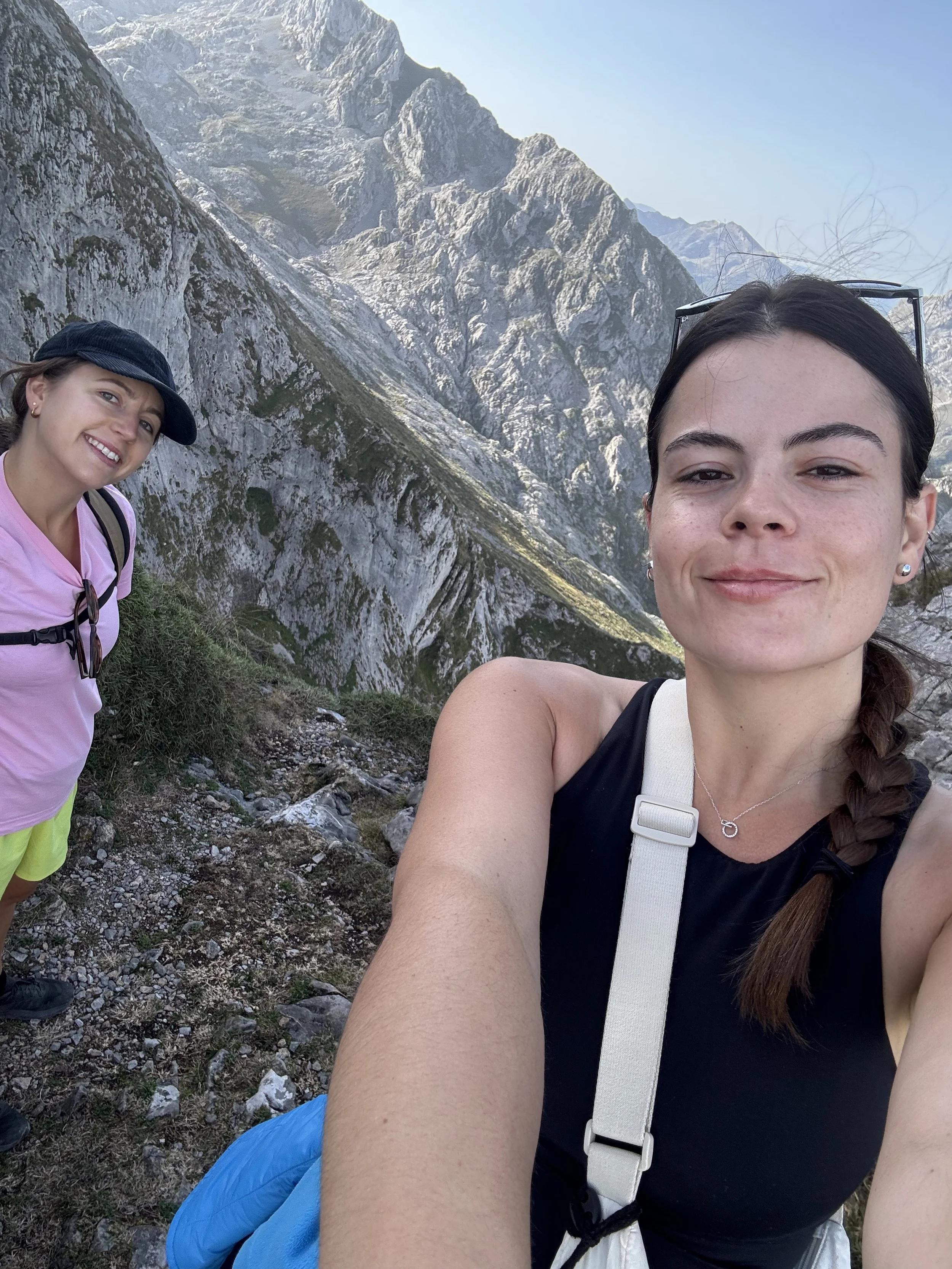
Cheese in Asturias, Northern Spain
At the beginning of September, I flew to Santander to meet my wonderful bestie Laura, who flew in from Madrid, where she grew up. We hired a car and spent each day driving to a different area of the less-known region of northern Spain, Asturias. This blog will involve telling stories about cheese, but it will also be embedded with stories, culture and history, as this is what brings the cheese to life and gives a better understanding of why this region’s cheeses must be celebrated and eaten!
To set the scene and give an insight into our trip, Laura booked all of the accommodation for each night (we stayed somewhere different every night). The first place we stayed was a 2.5-hour drive from Santander, up in the mountains by the Senda del Oso, which is Spanish for the bear trail. There are endangered Cantabrian brown bears in this area and, although we didn’t see them, we were spoiled by the wildlife that we did bear witness to (that wasn’t intentional!)
Once we had checked into our first night’s accommodation, whose dining room looked out onto the forest with a river running through it that you could see through the floor-to-ceiling glass, we walked down to San Martín and got to see bison and deer on the way. I had never seen bison before and they sure did surprise us by their size!
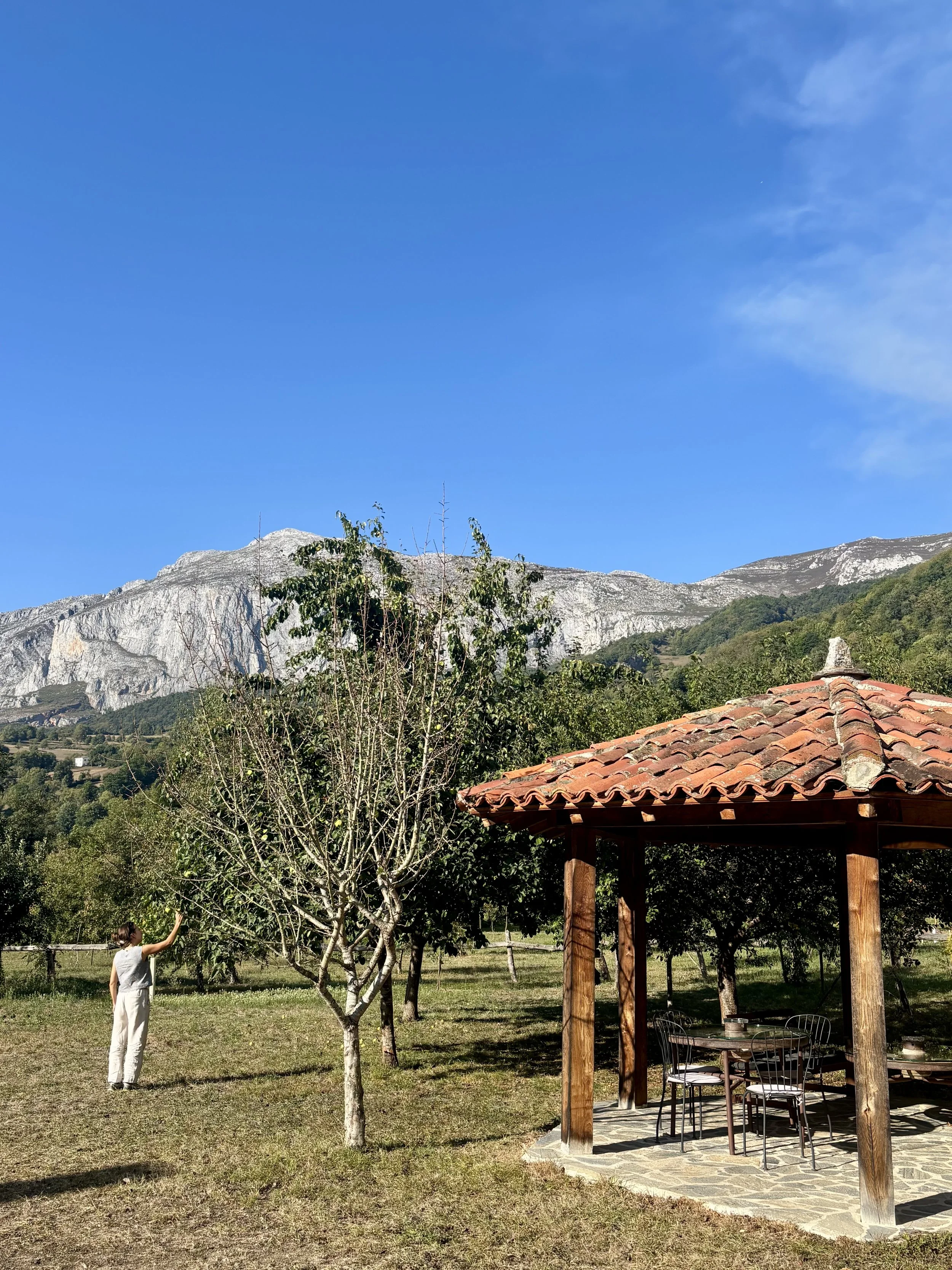
Checking if the quince were ripe - first night’s accommodation
We had dinner in a local restaurant and experienced my first (not for Laura) look at how cider is poured in Asturias. I became very excited by this whenever we dined out - the way it is served is from a height, with the cider being poured into the glass from above. We were told that this helps create the characteristic bubbles and aeration, and the whole ritual made the cider feel like so much more than just a drink. We shared the famous Asturian dish cachopo, which consists of veal fillets with slices of Serrano ham and cheese in between. We finished our meal with Orujo de Hierbas, the herbal spirit, which was infused with local mountain herbs, flowers and plants - very medicinal and, according to us, great for digestion!
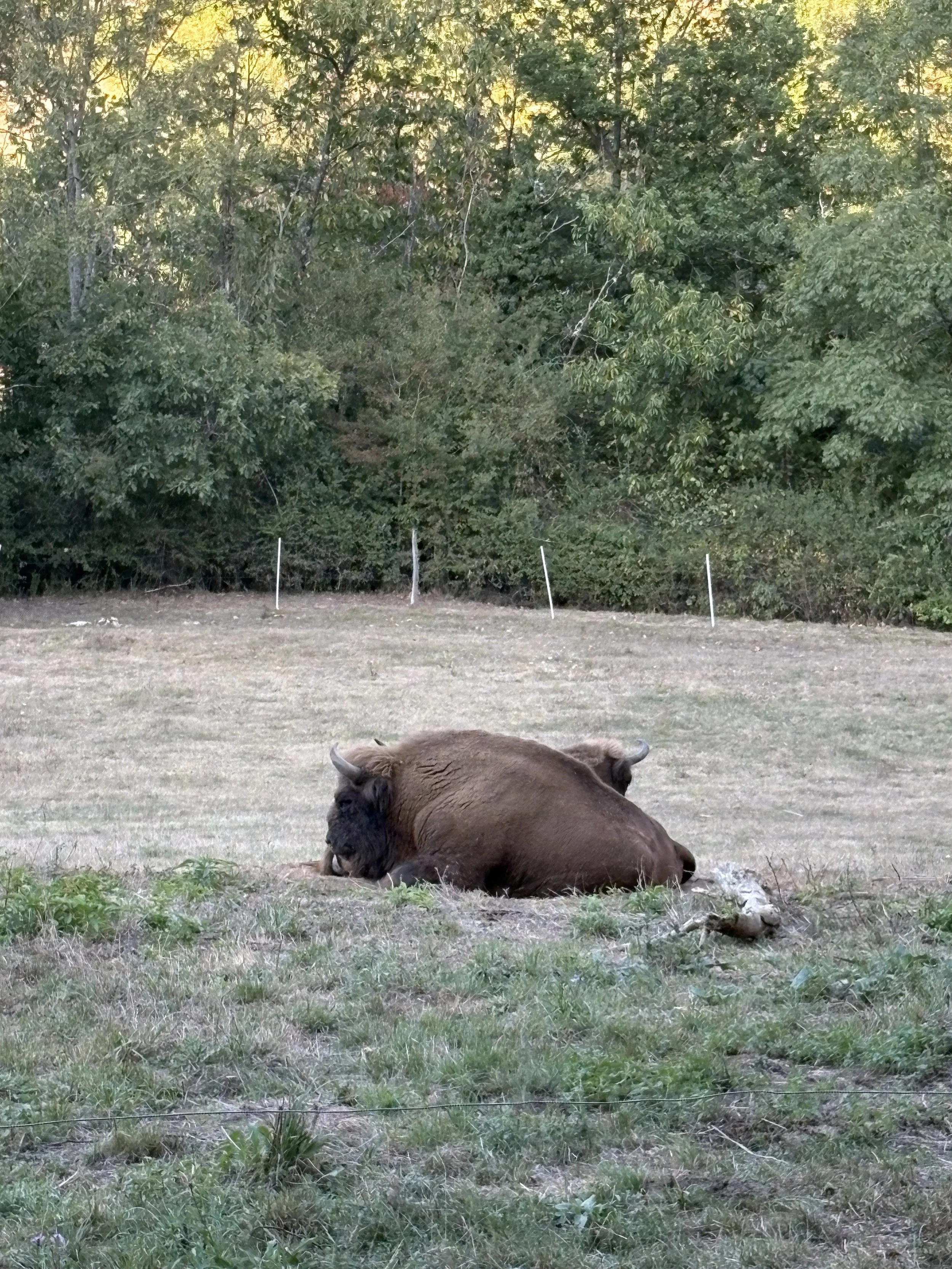
Bison on our walk to San Martín
The next morning, while we were eating breakfast, we were lucky enough to see a deer skipping before us. It was such a beautiful start to our day. Despite an eventful morning that included a flat tyre and lots of waiting around for a replacement car, we managed to visit Rey Silo dairy in Pravia, Asturias.
Rey Silo Dairy
We met Pascual who is one of the founders of Rey Silo alongside Ernesto Madera, a trained biologist and master cheesemaker. Pascual showed us around the dairy telling us many fascinating stories along the way (thanks Laura for all of the translating!)
We met Ernesto while he was salting the Rey Silo cheeses and he spoke to us about the processes involved in making the cheese and the ideas they have implemented in the maturing rooms. Rey Silo is made using raw (although depending on the customer whether they pasteurise or not) whole cow’s milk, with the cheeses being shaped and salted by hand before the ageing process begins. There is another cheese that they make called Mamá Marisa which I had tried in Brindisa’s maturing rooms in London. It was here that I learnt about how the producers Rey Silo and chef José Andrés started making this cheese. Mamá Marisa is named after the chef's mother, who introduced him to Asturian blue cheeses when he was a child. Ernesto and José had wanted to make a cheese that was not as strong as Cabrales and not dissimilar to Joe Schneider’s Stichelton (a raw milk Stilon from the Welbeck Estate). Mamá Marisa wheels are matured in the dairy’s underground cellar which is custom made to mimic a cave like environment, to encourage moulds onto the rinds.
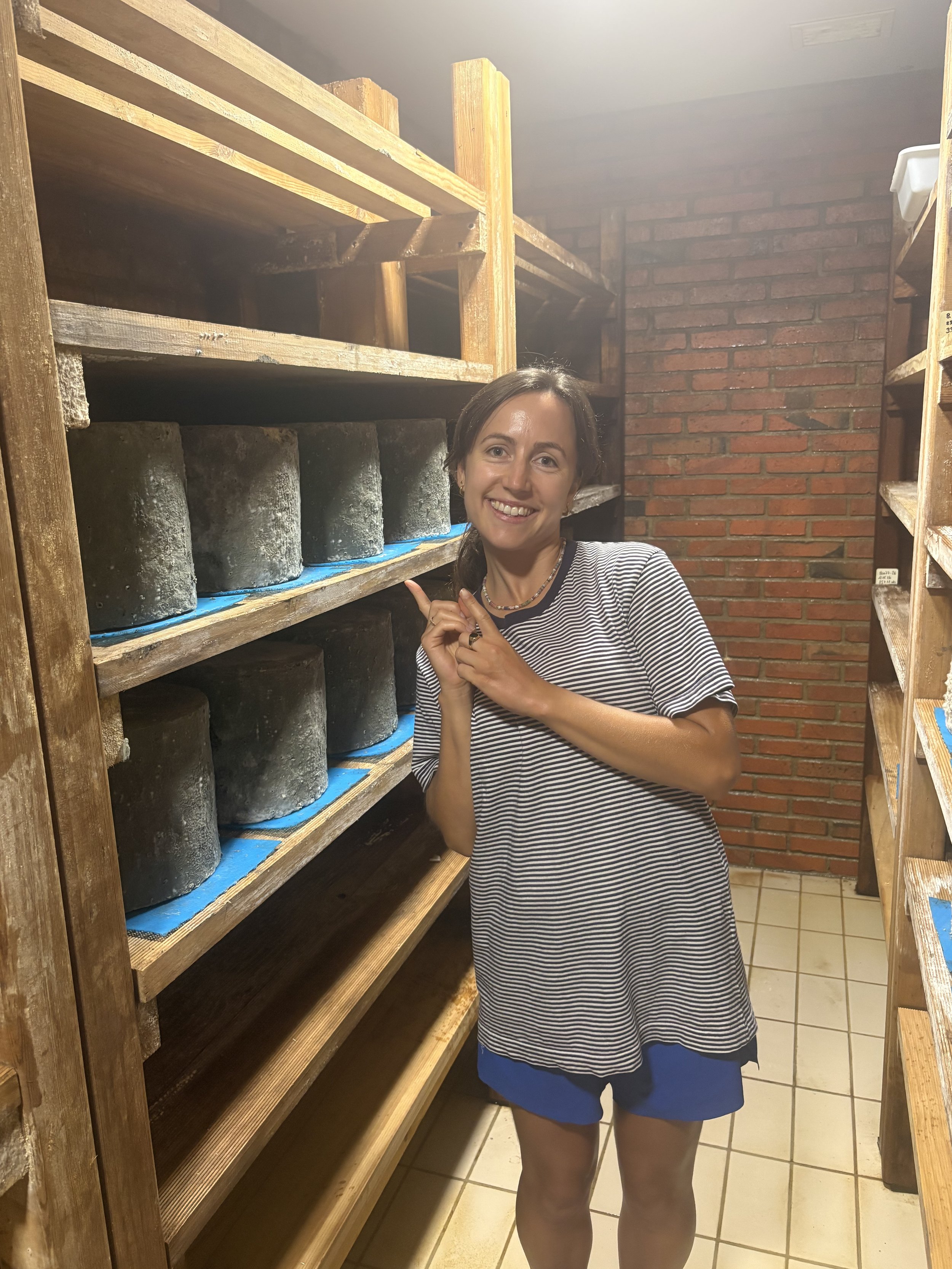
Mamá Marisa maturing rooms “cave style”
Ernesto’s work with the white cylindrical cheese Rey Silo has involved bringing back a traditional Asturian recipe, connecting the cheese to a much older cheesemaking tradition in the region. The dairy, which is also called Rey Silo, describes Rey Silo Blanco as one of Europe’s oldest cheese varieties, with written records dating back to the eighth century. It’s closely related to the traditional Asturian cheese Afuega’l Pitu, but Rey Silo has developed its own identity through the use of raw milk and the way it is aged.
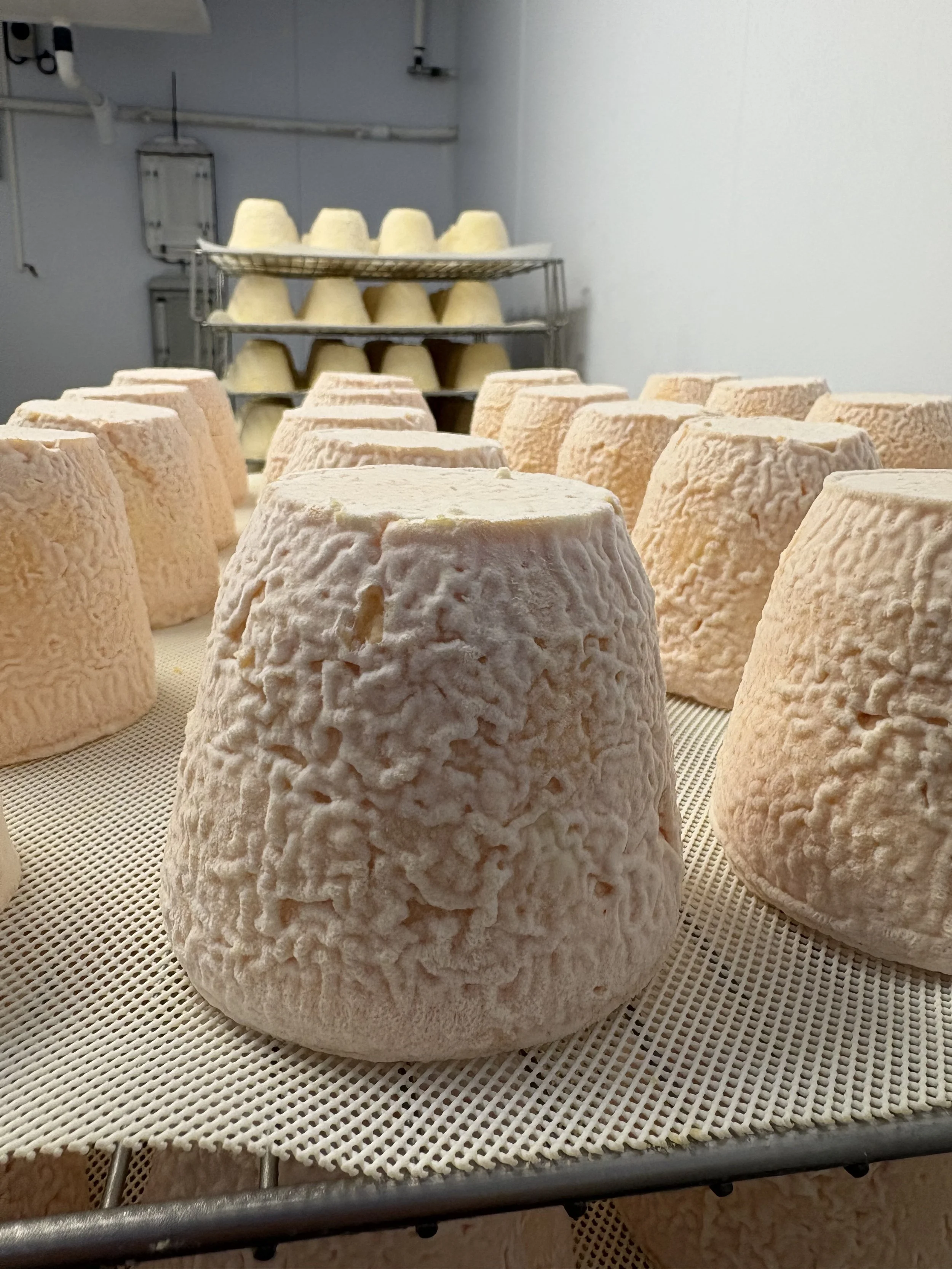
Rey Silo with Paprika
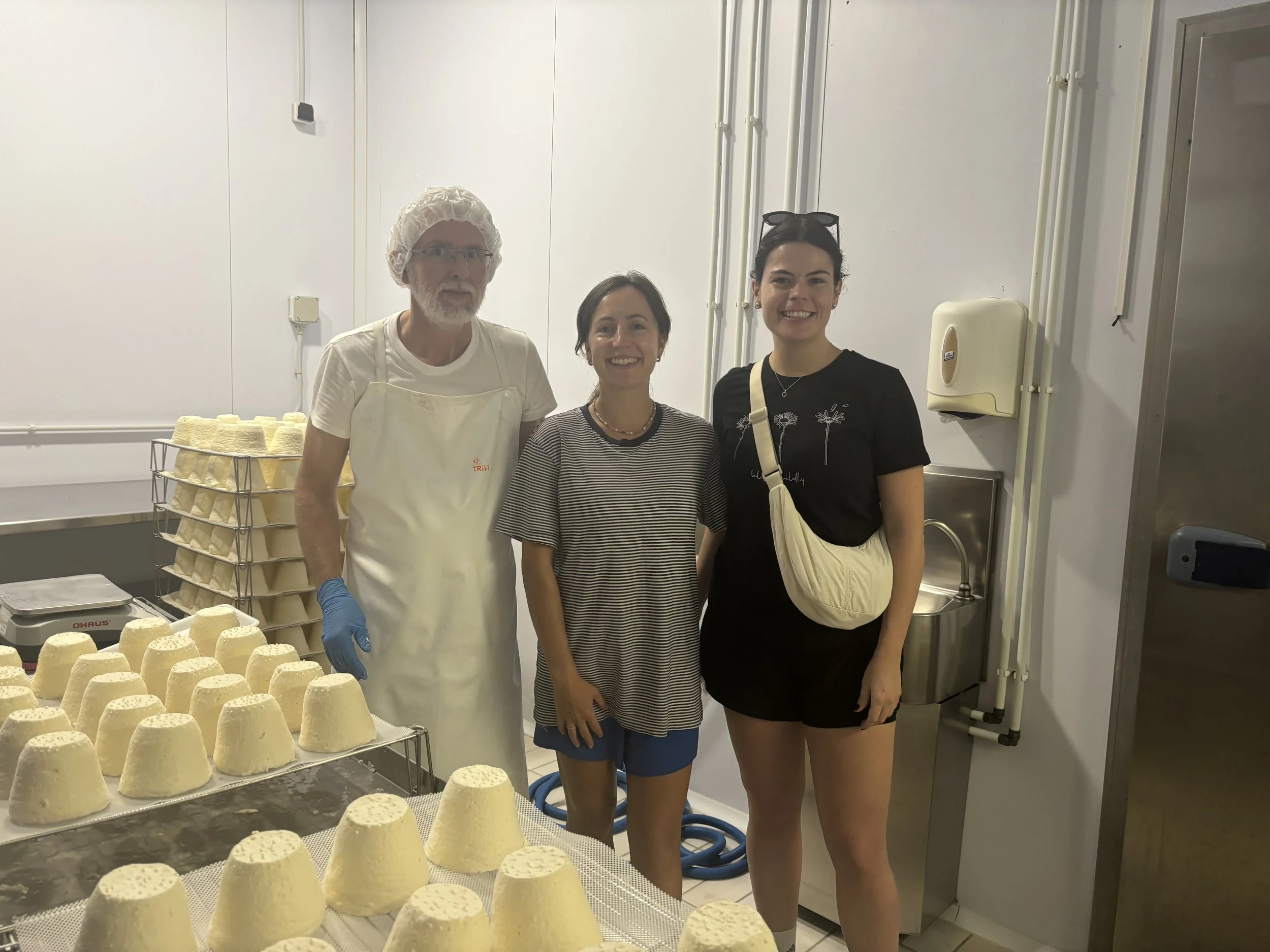
Ernesto - salting the cheeses
There’s also a nice connection between the cheese and Asturias’ cider culture. The cheese was inspired by the dense, mature cheeses traditionally served with cider at the old sidrería El Infierno in Grado. These were cheeses that were said to “afogar el pitu” - in Asturian, meaning “to choke the throat”. The story goes that people would ask for more cider because they needed it to wash the cheese down. That’s where the name Afuega’l Pitu comes from, and it feels like a good example of how closely food and cider culture are tied together in Asturias.
Pascual also told us the story behind the name they chose for their own cheese. Rey Silo takes its name from King Silo, the eighth-century Asturian king whose court was established in Pravia in 774. Pravia was an important centre of the early Kingdom of Asturias, and King Silo’s connection to the town is still very much part of its identity today. So while the cheese has its roots in the older Afuega’l Pitu tradition, the Rey Silo dairy gave it a new name and identity, linking it back to another part of Asturias’ history.
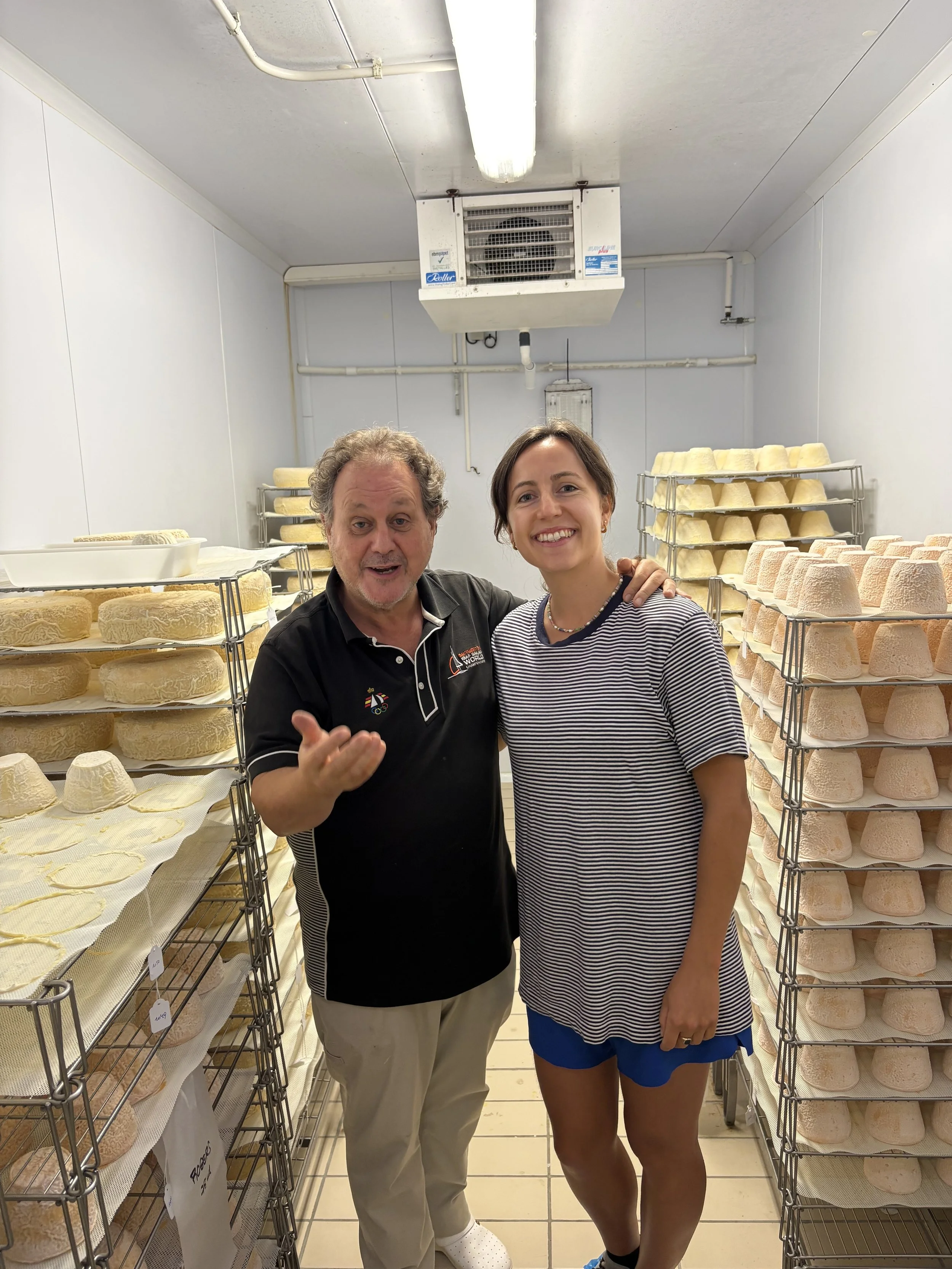
Pascual and I in the cheese rooms
I loved this part of the visit because it really brought home what I had hoped this trip would be about: understanding the story behind a cheese rather than simply tasting it. The landscape, the history, the cider, the cows, the people and the traditions all become part of what you taste.
On Saturday morning, we prepared for our hike by going from shop to shop in order to find the best quality cheese. At this point we were in Cangas de Onís, which attracts many Spanish tourists, so there are several shops that sell vacuum-packed cheeses. I was on a hunt for a cheese counter with cheese that was going to be freshly cut from a whole wheel.
We found an inconspicuous place where cheese was not at the forefront of the shop. It was a tiny fruit and veg shop called Sabores del Paraíso, where the owner’s cheese was hidden away in a fridge at the back, disguised by condensation on the glass. But do not fret - this was the best Queso de Gamonéu because she cut a brand-new wheel in front of us. I was so happy! If you have never tasted cheese from a wheel that has just been cut, I encourage you to add this to your bucket list!
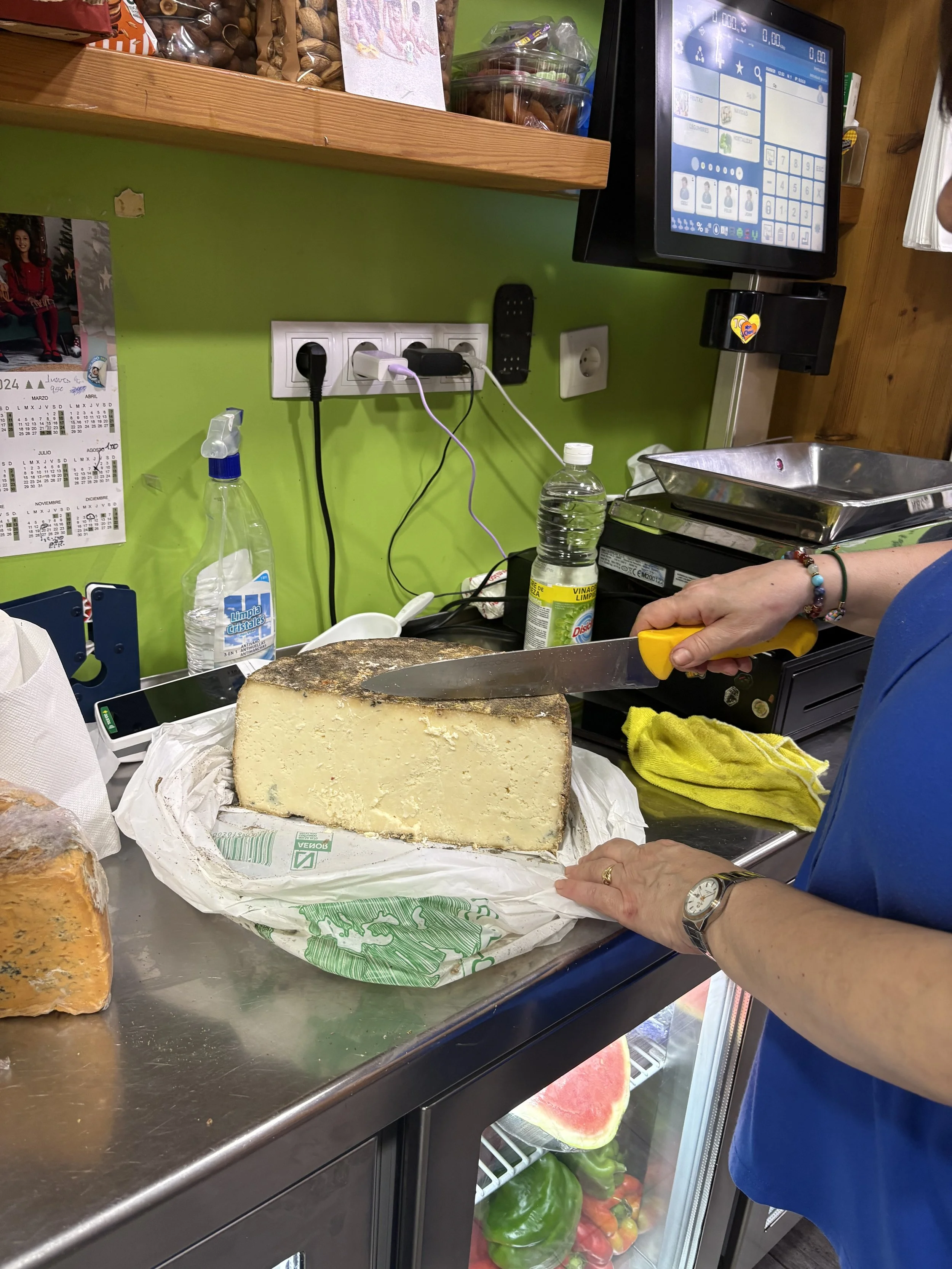
Freshly cut from a Gamonéu wheel, on the left you can just about see the Queso de las 3 Leches Rojo
We also bought some Queso de las 3 Leches Rojo from the same green grocer and were ready for our Picos de Europa hike and overnight stay in a refuge 1,400m up.
The Gamonéu reminded me of Caerphilly. It was such a comforting cheese, substantial and exactly the sort of cheese that would keep you going during a difficult working day as a farmer battling with the unpredictable elements of the Picos! Much like Caerphilly was traditionally associated with miners and the need for sustaining food during a long day underground.
With each bite I felt the richness of this cheese. Its flavours build gradually as you chew, with hints of blue from the delicate blue veins naturally present in the cheese. The overriding taste was butter. The rind is super earthy and actually looks like a mountain peak (so aesthetically pleasing!). The texture is firm and dry with a chalkiness, and I kept going back for more!
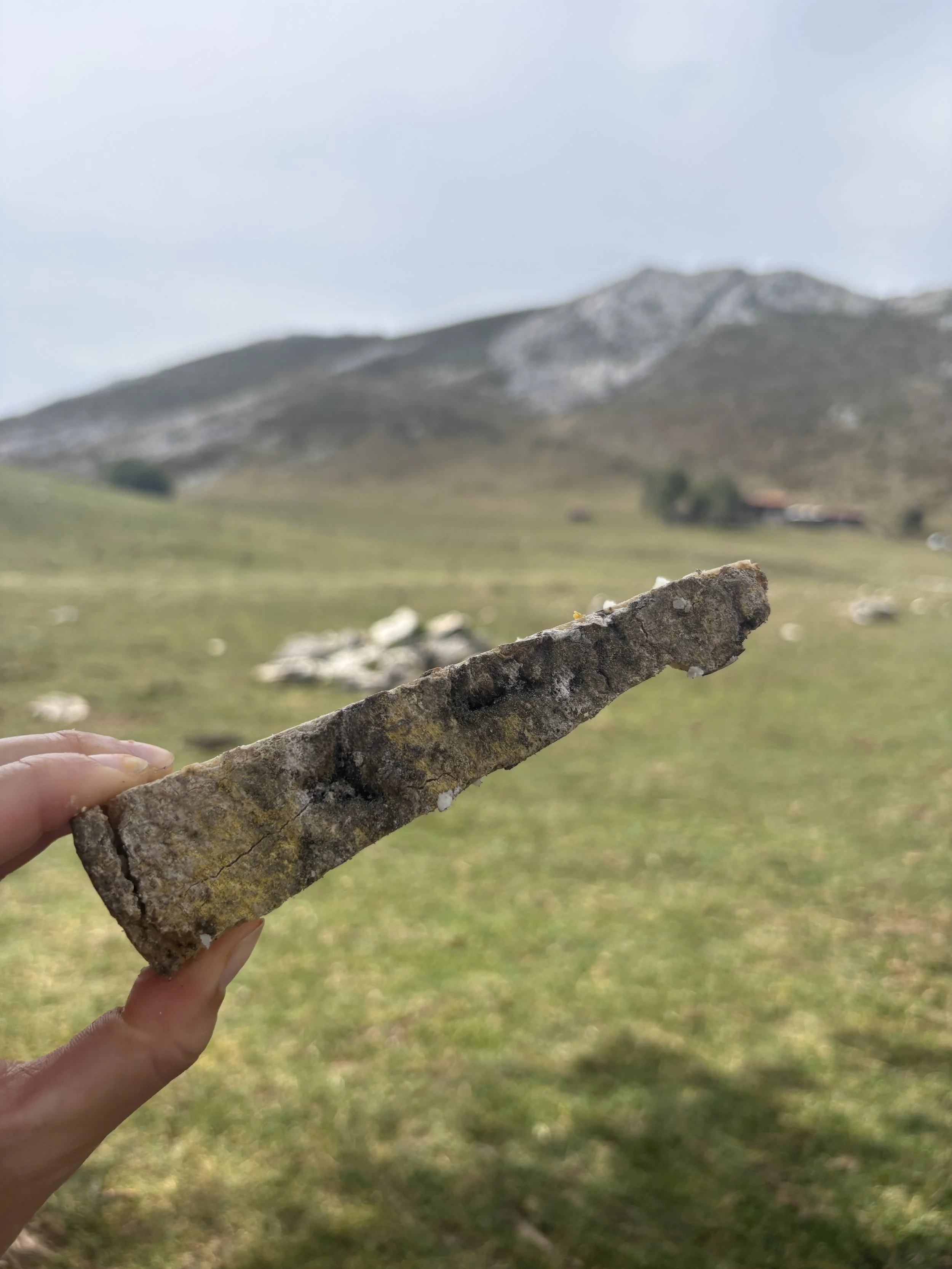
Rind or mountain?
The blue cheese, Queso de las 3 Leches Rojo, is not for the faint-hearted. It is a bold cheese, with lots of peppery notes and a strong blue taste, and it was really great with the homemade membrillo paste that we were given in a Tupperware the night before by a mother and son we had made friends with. They ran a bar in Cangas, where we had a plate of cheese and more cider, and we got to see our friend show off his skills of pouring without looking from a huge height!
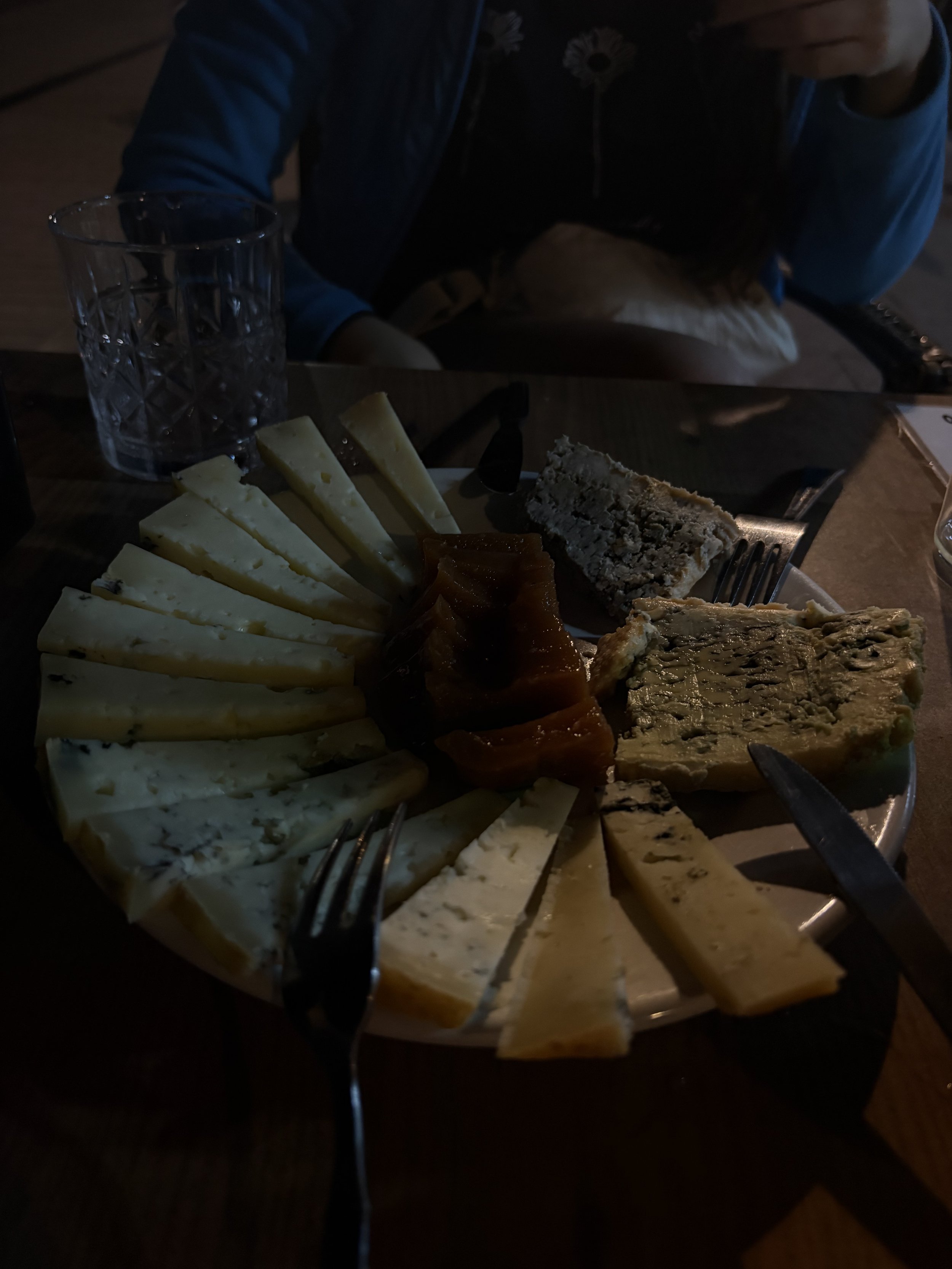
Cheese and Cider in Cangas ft. homemade membrillo paste (quince jelly)
The Sunday hike was something else. We spent the morning hiking up to a viewing point two hours away and saw chamois, wild horses and cows, eventually making it to the border of León and Asturias. If you’re afraid of heights, this is not for you, as there is a sheer drop and sharp peaks that line the border.
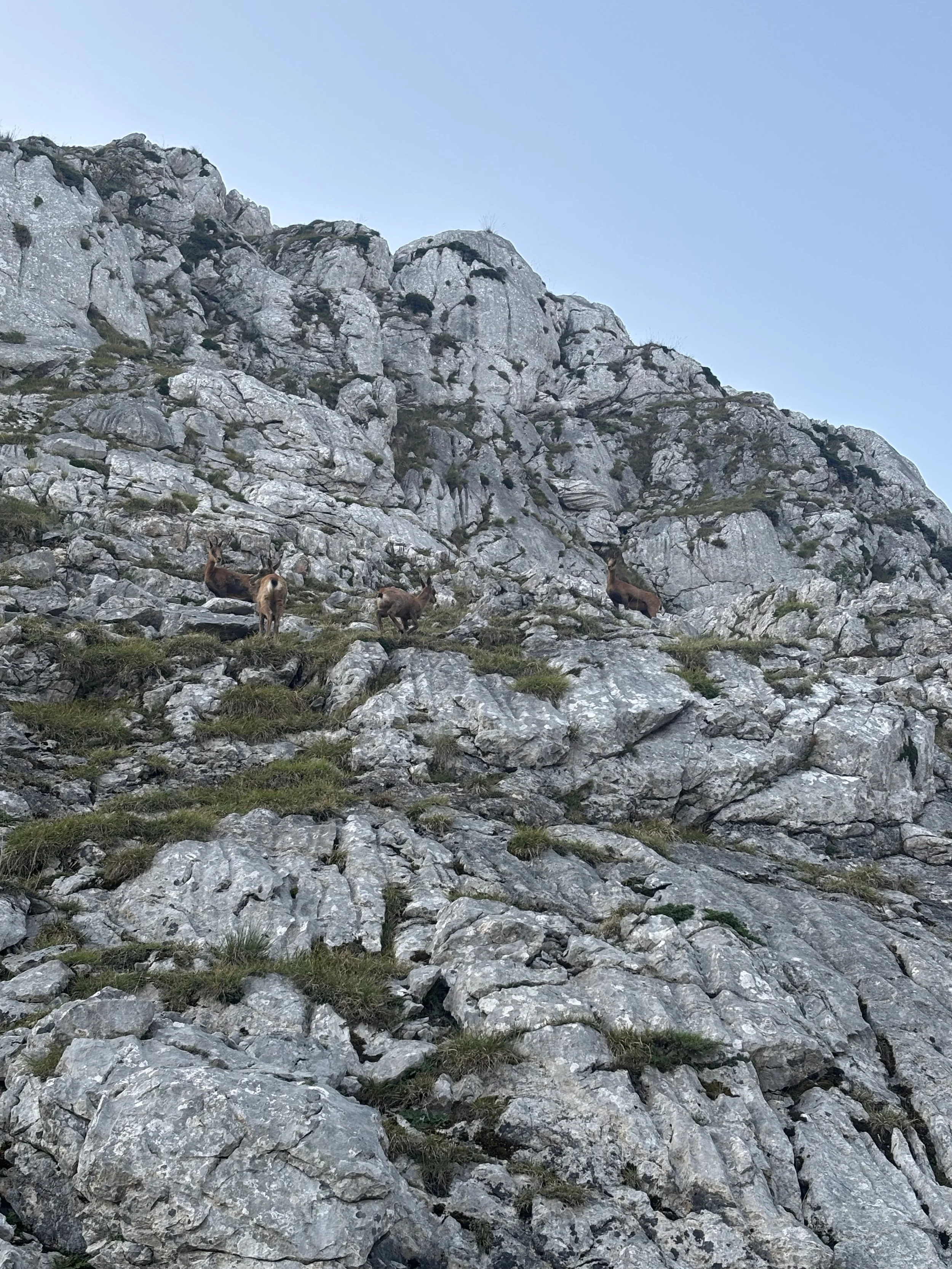
Beautiful chamois
I will never forget this morning’s hike. It was 8am, and no one was around except the animals on route. You could hear the trickling water from streams nearby, the scuttling of the chamois who nimbly balanced on the edge of the rocks, playing chase with each other, the distant cow bells and the dull light before the sun appeared from behind the mountains.
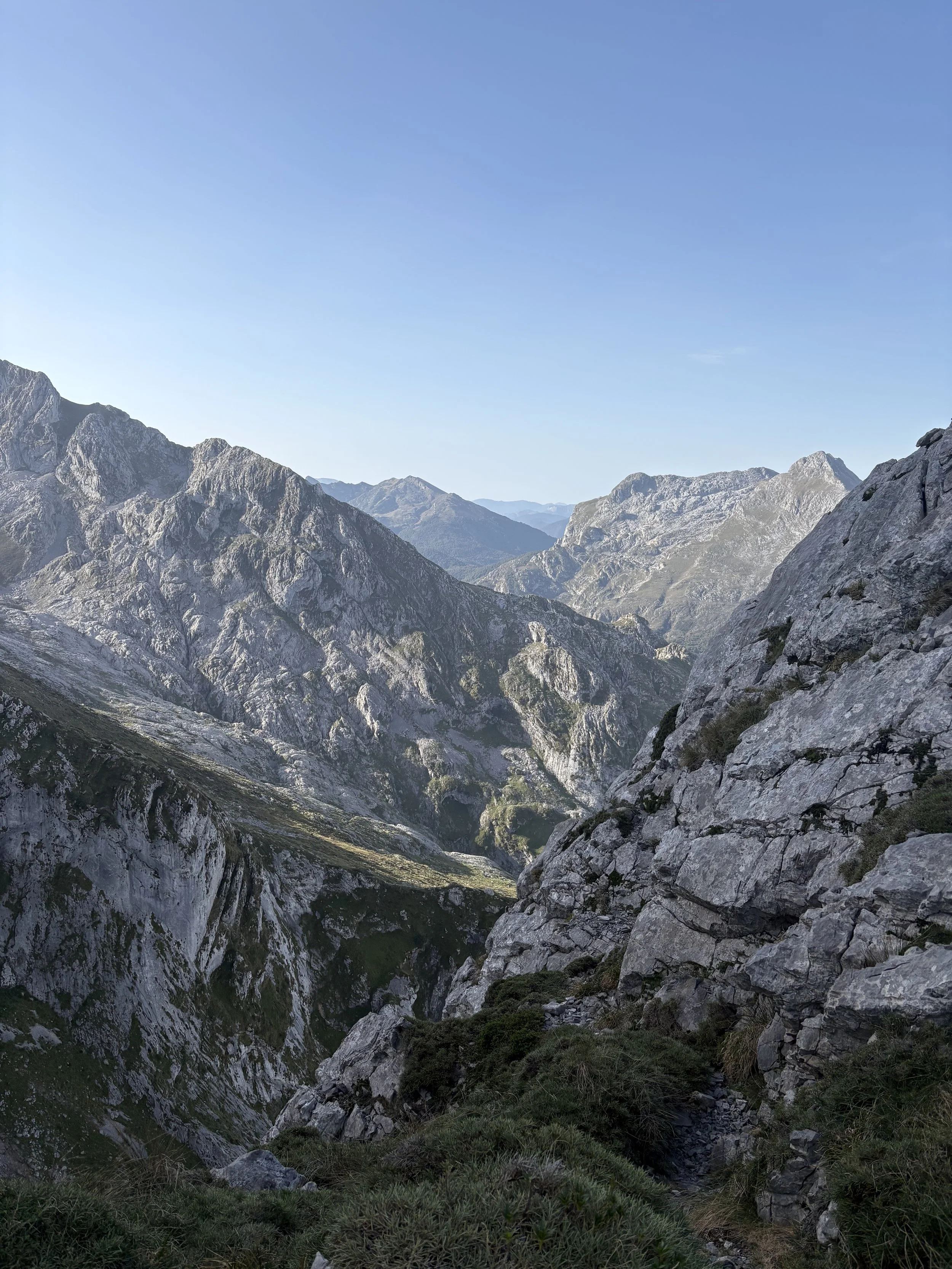
Where Asturias meets León
On our way down, the heavens opened and there is no shelter in the mountains (except the random trees you find further down at lower altitude), so we just had to keep going, ensuring we didn’t slip on the wet stones and very rocky terrain.
We managed to get back to the refuge to dry ourselves off and warm up with a cup of coffee before making the descent all the way back towards Cangas.
In contrast to our picnic the day before (hot and sunny), we spent the descent sheltering ourselves under a tree to enjoy our cheese (round two!)
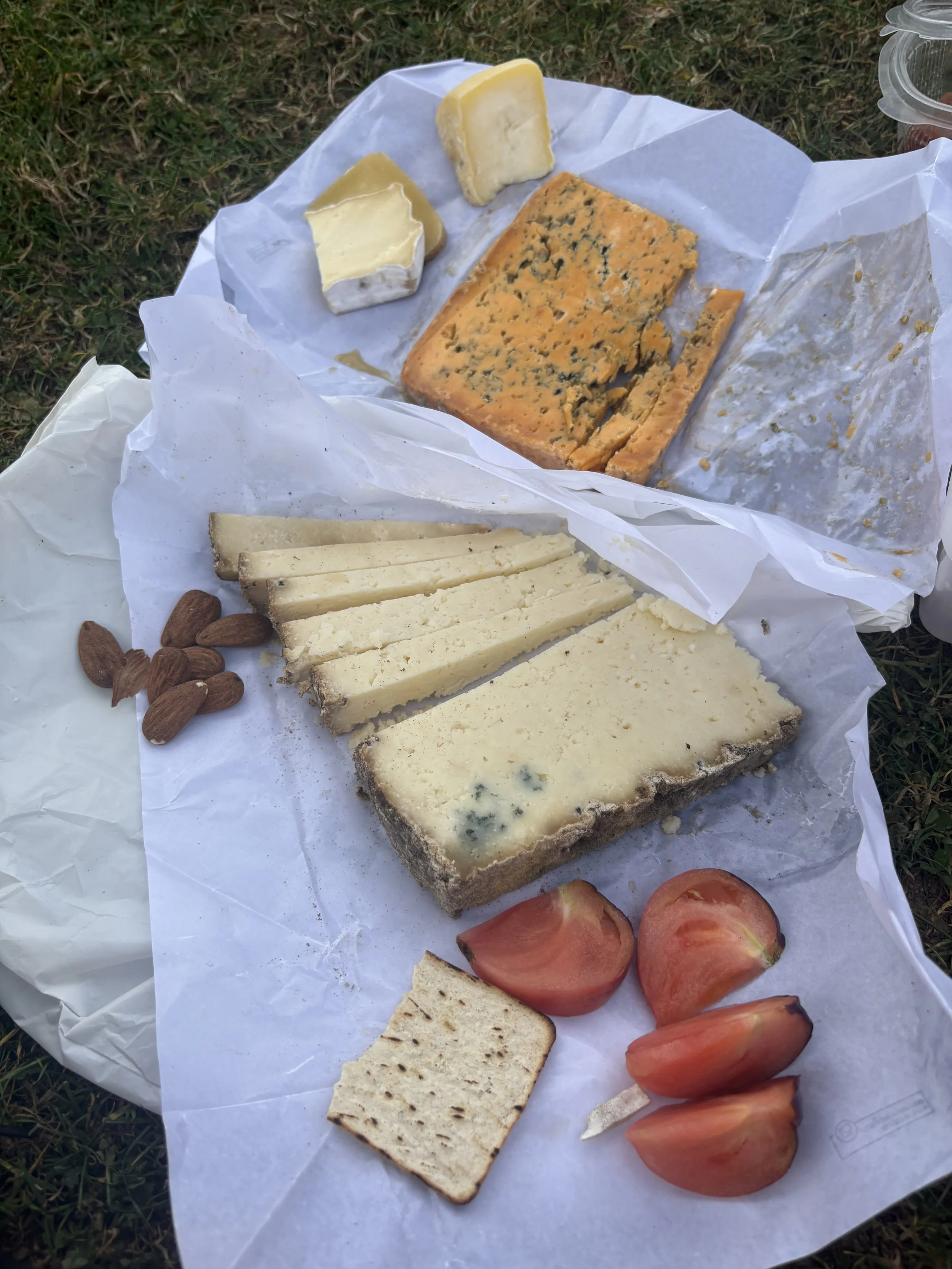
Our ‘sunny’ picnic
The rain didn’t affect us because the sun comes out soon enough and, as cliché as it may sound, cheese is there to comfort you and make you feel warm inside. So, after our pit-stop balancing on a tree branch, we were content and had enough fuel to get down the mountain.
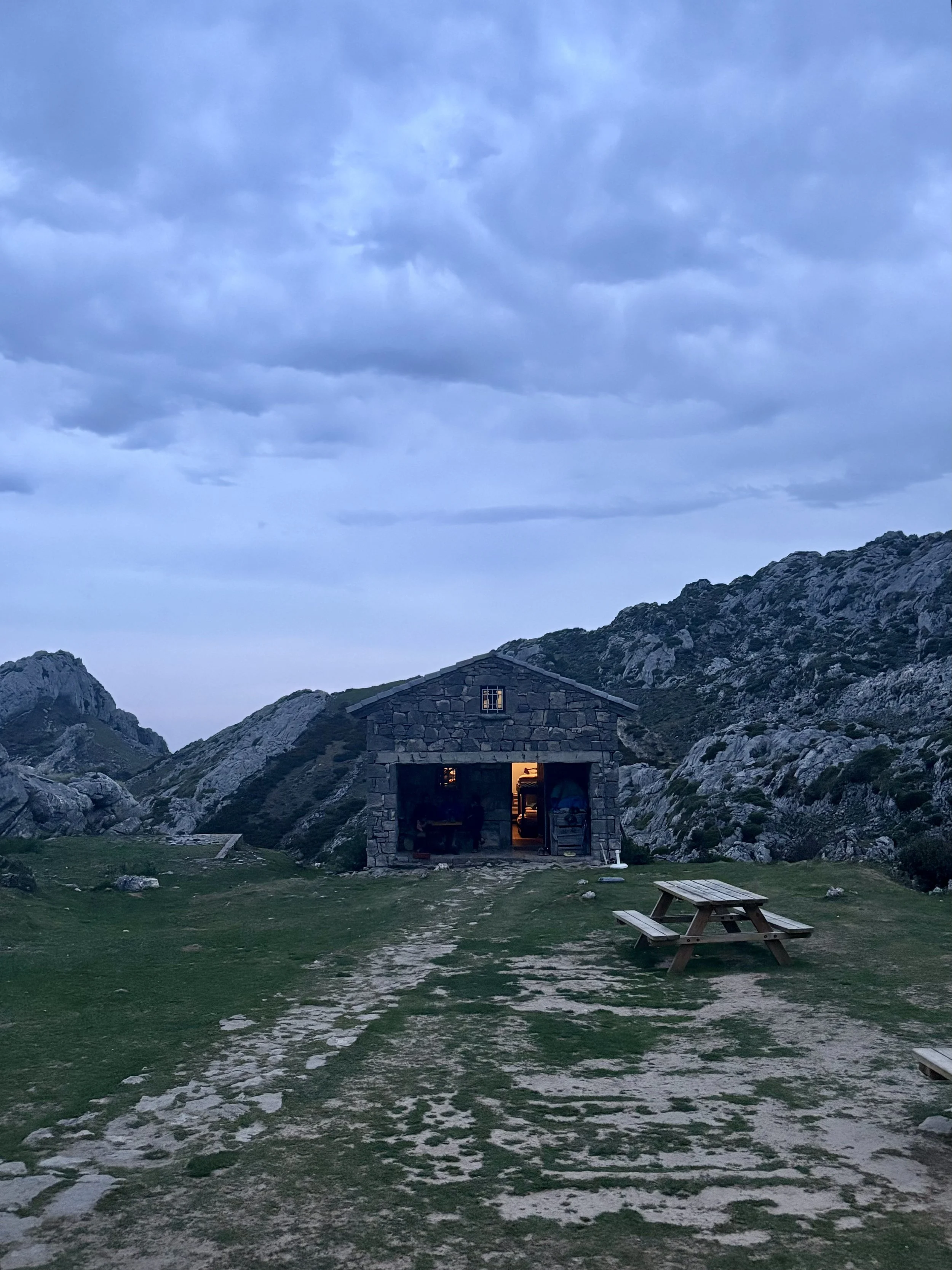
Finding refuge - where we slept for the night
There is so much of Asturias that we didn’t see, and the surrounding regions of Cantabria and Galicia that I will definitely explore in the future. What an experience, and I feel so grateful to have shared it with Laura, who shares a deep love and fondness for cheese, culture, history and the outdoors life!
Thank you to Pascual and Ernesto for warmly welcoming us into your cheese world. Northern Spain, I will be back.