Portuguese cheese + history
Last month I hosted a Portuguese cheese evening. I have to confess, when deciding to put this event on, I was going into this blind not knowing hardly anything about Portuguese cheese, except that they often use thistle rennet to make it (more on that later). However, I am always willing to research unknown cheeses, and this turned out to be a discovery, not only of cheeses from Portugal, but also finding new delis/supermarkets that sell entirely Portuguese/Brazilian produce.
The pairings were as follows:
Queijo fresco with doce de Abóbora – (Sweet Portuguese Pumpkin Jam) on mini tostas and Vinho Verde
Palhais Chèvre with Oliveira da Serra oil and Galega Olives
Queijo de Ovelha Amanteigado
Mahón - chilled Ruby Port (the only non-Portuguese cheese!)
Queijo São Jorge - 7 meses With Madeira

In the garden of Richard 1st, Greenwich - 20th May 2026
Queijo fresco is usually served cold with pumpkin jam on top of mini toasts. I found it so interesting reading about the evolution of the pumpkin jam accompaniment. The history of doce de Abóbora (pumpkin jam) dates back to Portugal’s long agricultural past. Pumpkins, or abóboras, were introduced to Europe after the discovery of the Americas in the 16th century.
So where did pumpkins come from? Pumpkins originated in the Americas and Portuguese explorers and traders played a key role in spreading these New World ingredients throughout Europe, Africa, and Asia. Pumpkin was then adopted into Portuguese cuisine and used in many recipes like soups, stews, pastries, and sweet preserves like this jam. Nuns in convents were responsible for experimenting with the pumpkins natural sweetness, they would add sugar, cinnamon, and sometimes lemon peel resulting in creating the pumpkin jam we know today, apparently it symbolised comfort and care. I was pleased with this pairing as everyone seemed to really enjoy the pumpkin jam with the queijo fresco and telling the guests the origins of the product helped them to connect with what they were eating.
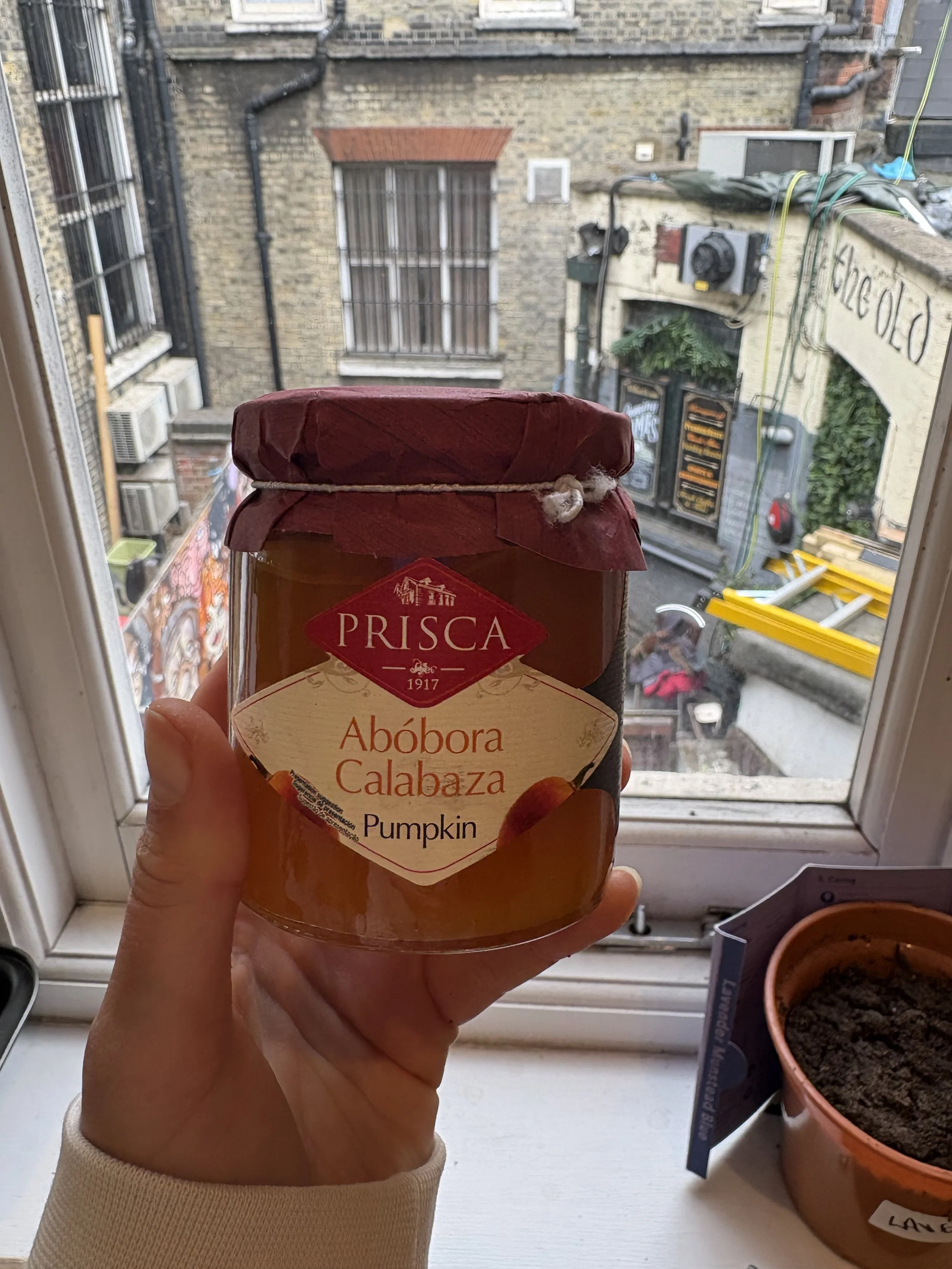
Doce de Abóbora - Pumpkin Jam
The third cheese (Queijo de Ovelha Amanteigado) is definitely one to discuss as it is unique in appearance, flavour, and texture. If you have heard of Torta in Spain, it is similar as it is made from ewes' milk using cardoon thistle rennet which results in a full-bodied, soft cheese with a creamy interior. There is a tradition in south-west Spain, and over the border in Portugal, of making ewes' milk cheeses using cardoon thistle rennet. The reason - like many other reasons for using certain materials for cheeses is simply because cheesemakers used what resources they had available to them. The thistle rennet gives both a citrusy, earthy flavor alongside a slight sourness. Making thistle rennet involves harvesting, drying, and crushing the purple stamens (threads) of wild thistles to extract their coagulating enzymes. The crushed stamens are soaked in warm water to create a botanical "tea" that can curdle milk for cheesemaking.
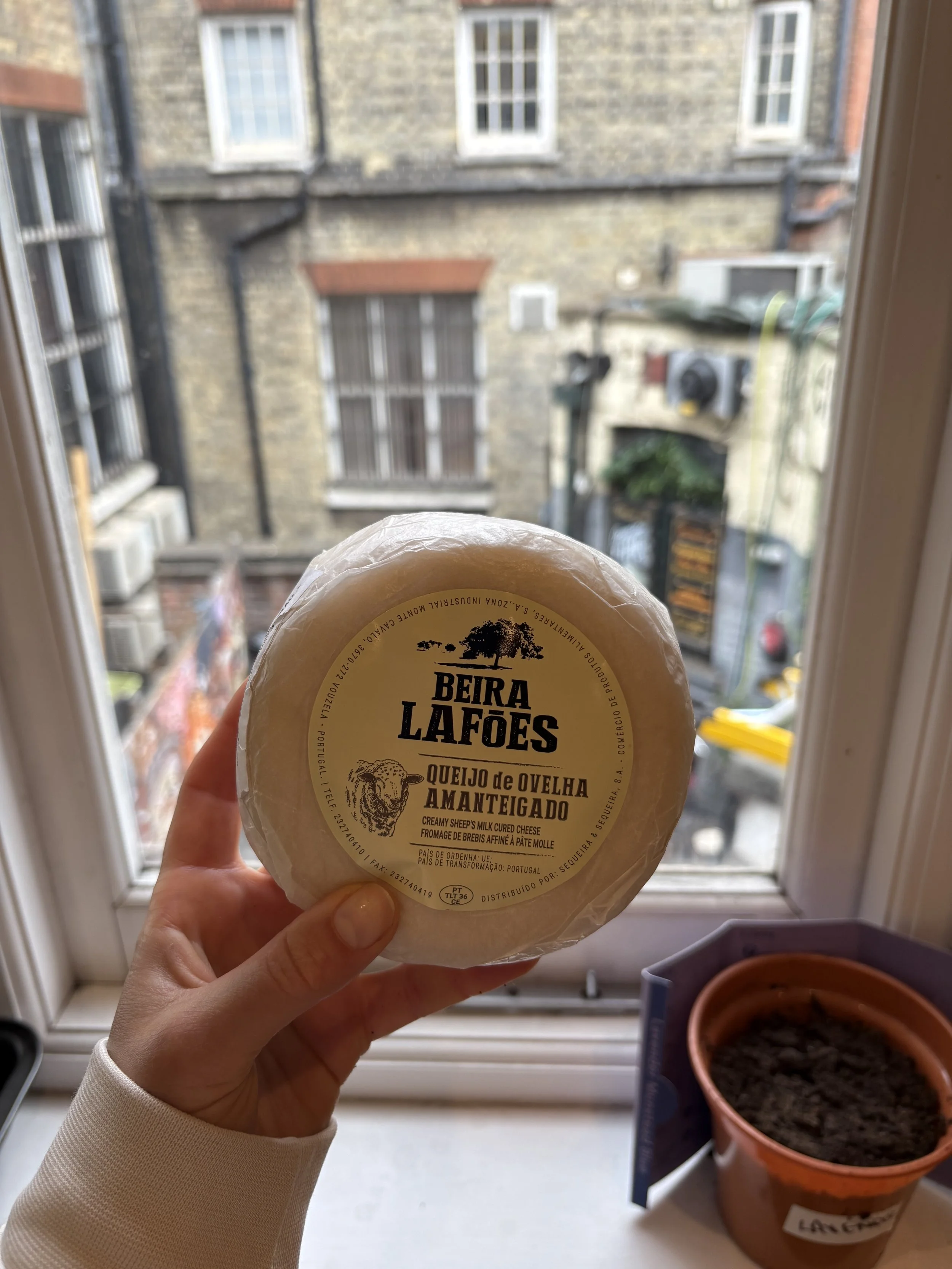
Queijo de Ovelha Amanteigado cheese
I will save talking about Mahón another time as this is a special cheese but is more suitable to a Spanish cheese blog post.
São Jorge cheese is one of those cheeses I feel I should have known more about earlier, but only really started properly digging into recently. The more I read, the more I realised it’s not just a cheese with a long history, but one that really tells the story of the Azores themselves. I actually bought 4 different versions of this cheese from Delicas Deli in Stockwell/Wandsworth area. We tasted a 4, 7, 12, 24 month old São Jorge. As expected, each cheese became richer in flavour, and harder in texture. This cheese reminds me of Provolone or Asiago Italian cheeses.
São Jorge has been produced on the island of São Jorge since the 15th century, at a time when the Azores were still being newly settled and quite sparsely populated. What I found particularly interesting is that Portugal actively encouraged settlers from parts of Belgium and the historical region of Flanders to move to the islands. These Flemish communities weren’t random arrivals either - they were experienced farmers and producers of dairy, meat, and preserved foods, and they ended up shaping the agricultural identity of the islands in a really lasting way.
Some of the Azores were even nicknamed the “Flemish Islands,” which I had no idea about before looking into this. One key figure who comes up in this story is Willem van der Haegen (Guilherme da Silveira), a Flemish nobleman who played a role in organising settlement in parts of the Azores in the late 15th century. It’s fascinating how individual people can end up influencing something as everyday (and essential) as cheese.
The Flemish settlers brought with them a lot of practical knowledge that turned out to be perfectly suited to island life. They were used to cattle farming in cooler, wetter northern European climates, and they knew how to work with milk in a way that made it stable and long-lasting. Techniques like butter and cheese production, dairy preservation, and especially making aged, durable cheeses were already part of their food culture. It makes so much sense that this knowledge translated so well to São Jorge.
What really struck me is how naturally this all aligned with the island itself. São Jorge is green, steep, volcanic, and incredibly lush - more like parts of northern Europe than mainland Portugal. The grazing is excellent, and dairy farming quickly became one of the most productive agricultural activities on the island. Hard cheeses also made perfect sense here because they travel well, which was crucial in a time when export meant shipping across the Atlantic.
Over time, what started as practical survival food and learned technique evolved into something much more defined. By the 18th and 19th centuries, São Jorge cheese was already being widely recognised in Portugal, valued for its firm texture, depth of flavour, and ability to age beautifully.
Now I really want to visit the Azores!
New discoveries in London :
Portuguese/Brazilian supermarket : Serrana
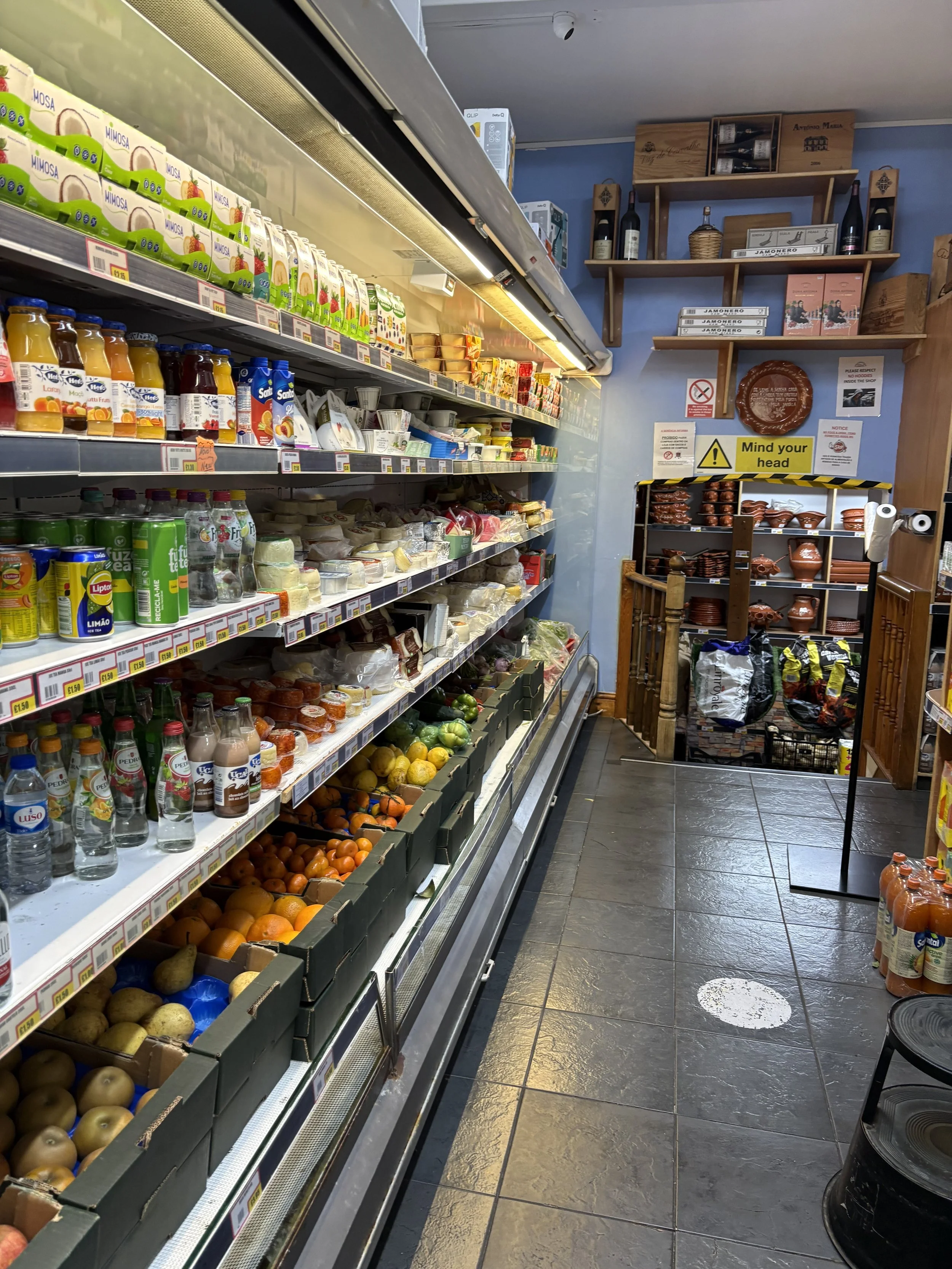
Inside Serrana supermarket. Love their shelving displays!
This place felt very authentic as some people who worked there only spoke Portuguese! And everyone who was shopping or outside on the pavement drinking coffee at tables and chairs were conversing in Portuguese.
Delicias - this is a really cute deli selling lots of fresh produce, you can also sit outside at tables and drink coffee and eat a typical Portuguese sweet or savoury treat.
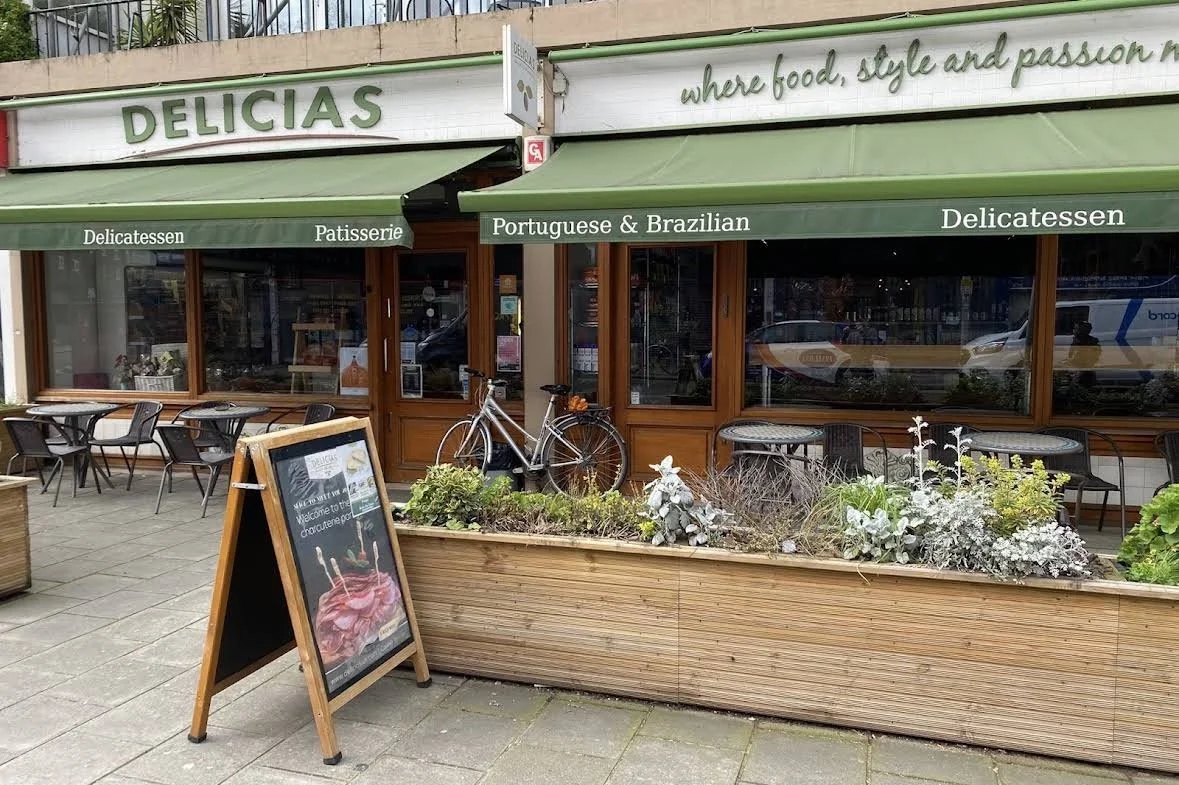
Outside Delicias
There are definitely way more Portuguese cheeses that I would love to try and I know that when I get to go there, I will certainly be able to taste a wider variety. But for now, I am lucky to have these supermarkets on my doorstep!
